
Revised Staging
The clinical evaluation of lipedema or lymphedema includes assessing the patient's Stage. Stages reflect the progression of each condition based on changes in the shape, size, and condition of the affected areas. For examples of different Stages, see Photos of Lymphedema and Lipedema.
Additional Stages have been proposed for both lipedema and lymphedema as explained below. These changes add Stages 1.5 and 2.5 to better describe the progression of each condition.
New Lipedema Stages
Based on Al-Ghadban, S.; Evancio, J.V.; Alfiscar, P.E.F.; Herbst, K.L. New Characterization of Lipedema Stages: Focus on Pain, Water, Fat and Skeletal Muscle. Life 2025, 15, 1397. https://doi.org/10.3390/life15091397
This article adds two intermediate stages—Stage 1.5 and Stage 2.5 because clinical observations show some patients do not fit into the existing stage definitions but display overlapping features, reflecting transitional phenotypes from smooth → textured → lobular.
Table 2 shows the new half-stages and the classic stages
| Stage | Skin | Hypodermis |
|---|---|---|
| 1 | Smooth | Grainy to pearl-sized nodules |
| 1.5 | Grainy to pearl-sized nodules | Indentations in the skin that affect the upper ½ or lower ½ of the leg anterior, lateral and posterior |
| 2 | Grainy to pearl-to-walnut-sized nodules | Indentations in the skin of the entire thigh, anterior, lateral and posterior |
| 2.5 | Grainy, pearl-to-walnut-sized and larger nodules; lobules around the hips and knees; overhang over the elbow often present | Beginning of lobules in the tissue especially at the hip and around the knee; indentations in the skin of the entire thigh, anterior, lateral and posterior |
| 3 | Grainy, pearl-to-walnut-sized, and larger deformations; multiple lobules on upper arms, over elbows, on the abdomen, hips, thighs, knees and ankles | Skin folds on the upper arms, abdomen, hips and knees; indentations in the skin of the entire thigh, anterior, lateral and posterior |
Figure 1. Stages and features of lipedema
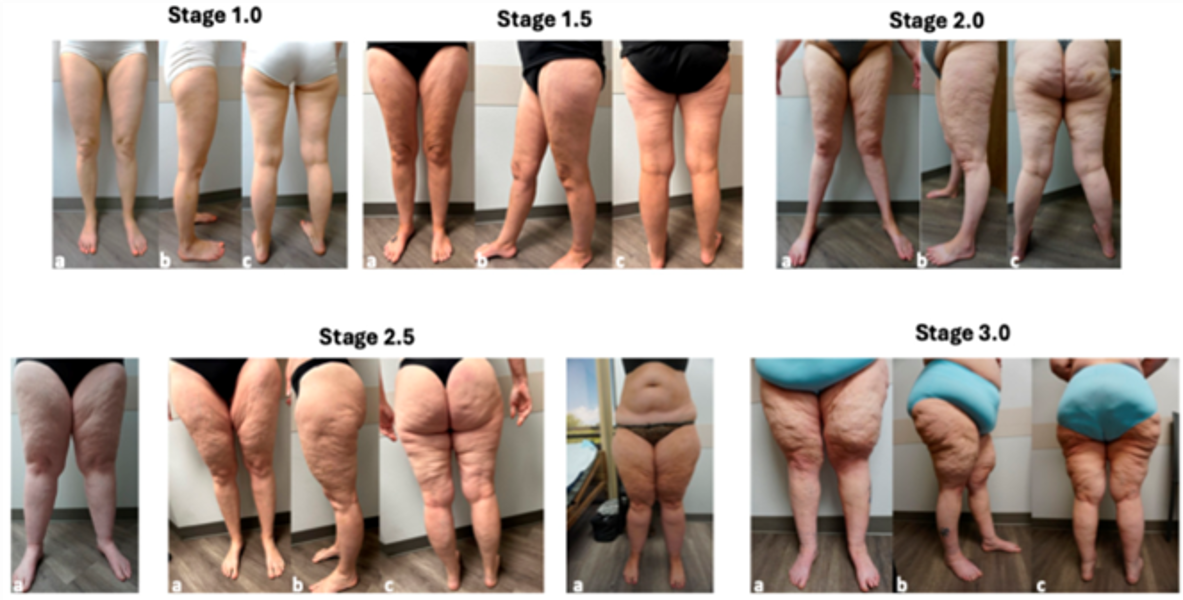
Figure 1. Stages and features of lipedema
Front (a), side (b) and back (c) pictures of women with lipedema Stage 1.0. 1.5, 2.0, 2.5 and 3.0. Three patients are presented for stage 2.5 to show the variety of presentations. All photos are of women with lipedema of the Allen and Hines type [27] with smaller ankles versus the Moncorps Type with a larger ankle cuff [28].
New ISL/ILF Lymphedema Stages
From Table 4. Lymphedema Staging Systems Aligned to Common Terminology Criteria for Adverse Events v5.0 Grading Criteria
Stage IIa Limb elevation alone rarely reduces swelling. Deep pitting is manifest.
CTCAE Grade 2
Stage IIb No, or only shallow pitting. Tissue fibrosis is more evident. There may be fatty induration.
CTCAE Grade 3
Terms:
CTCAE, Common Terminology Criteria for Adverse Events v5.0
ILF, International Lymphedema Framework;
ISL, International Society of Lymphology;
Adapted from Ref [12]: Douglass, J.; Kelly-Hope, L. Comparison of Staging Systems to Assess Lymphedema Caused by Cancer Therapies, Lymphatic Filariasis, and Podoconiosis. Lymphat. Res. Biol. 2019, 17, 550–556. [https://pubmed.ncbi.nlm.nih.gov/30789319/]. Podoconiosis is non-filarial elephantiasis (severe, chronic lymphedema) caused by walking barefoot on volcanic soil.